How to Get More Clients as a Therapist
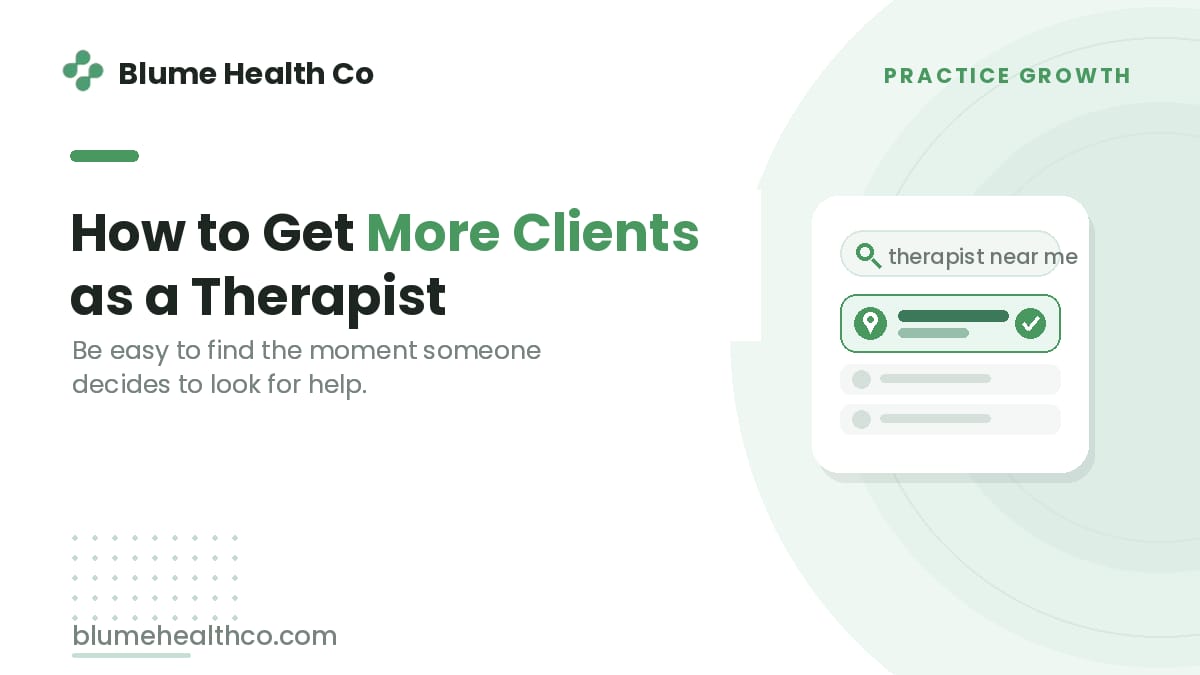
You get more clients by being easy to find the moment someone decides to look for help, then giving them fast reasons to trust you and reach out. Most therapists lean on referrals and networking. The bigger, quieter opportunity is showing up online, where people already search for care, the foundation of good SEO for therapists.
This guide skips the fluff. It shows you where clients look now, what to set up first, and how to do it all while protecting client privacy.
Key takeaways:
- More clients starts with visibility, not more networking events
- People search online before they call anyone.
- Free and low-cost listings do most of the heavy lifting.
- Reviews and a clear website turn searchers into inquiries.
- Everything you publish must protect client privacy.
The Clients Are There: They Just Can't Find You
You do not have a demand problem. You have a discoverability problem, and that is good news because it is fixable.
The need for therapy is huge and mostly unmet. Approximately 61.5 million US adults, nearly 1 in 4 (23.4%), experienced a mental illness in 2024, and just over half (52%) received treatment, according to SAMHSA's 2024 National Survey on Drug Use and Health. That leaves roughly 29.5 million adults who went without care.
Access makes the gap wider. About 137 million Americans, roughly 40% of the population, lived in a federally designated mental health provider shortage area as of the end of 2025. Not everyone in those areas is searching right now, but it shows demand for providers far outpaces supply.
So the people who need you exist. The question is whether they can find you when they finally decide to look.
Why You Cannot Rely on the Big Platforms Alone
Many therapists solve the visibility problem by joining a venture-backed platform like Headway, Rula, or Grow Therapy. These platforms can be a useful source of referrals, especially early on. But leaning on them as your only channel is risky, and it is worth understanding why before you build your whole practice on top of one.
These companies have raised hundreds of millions in venture capital and are valued in the billions. That funding brought a wave of new clinicians onto every platform, and the directories have become crowded. You are now one of thousands of names competing for the same client, on terms the platform sets. When a channel gets that saturated, the practices that stand out are usually the ones that also show up somewhere they own.
There is a deeper issue too. On these platforms, you do not own the relationship with the client, your placement in the results, or the rules that decide who gets seen. A change to the algorithm, the reimbursement structure, or the fee model can quietly shrink your referrals overnight, and there is little you can do about it. That is the real risk of depending on a channel you do not control, and it is a concern many clinicians weigh when they consider leaving a platform to start solo.
The fix is not to abandon these platforms. It is to stop treating them as your whole strategy. When you own your online presence, your own Google Business Profile, your own website, and your own directory listings, you build an asset no platform can take away or bury. That is what the rest of this guide helps you do.
Where Therapy Clients Actually Look Now
People start with a search, not a phone book or a friend's recommendation. If you are not in the results, you are invisible at the exact moment someone is ready to reach out.
Consider how people handle health worries today. Nearly 8 in 10 US adults (79%) say they are likely to look online when they have a question about a health symptom or condition. That habit does not stop at symptoms. Someone who searches "why do I feel anxious all the time" is often one step away from searching for a person who can help.
The way people search is also changing fast. About 1 in 3 US adults (32%) had used an AI chatbot for health information as of late 2025 - double the share a year earlier. These are chat tools like ChatGPT that answer questions in plain, conversational language, and more people lean on them every year.
The takeaway is simple. Your future clients are already looking. Your job is to be there, clearly, when they do.
Claim and Optimize Your Directory Listings
Start with directories, because they rank well and reach people who are ready to book. A directory is an online list where people browse and filter therapists by location, specialty, and insurance.
Psychology Today is the biggest one for therapists, and it is affordable. A Psychology Today listing costs $29.95 per month with no contract. TherapyDen and Zencare are worth adding too, and many have free tiers.
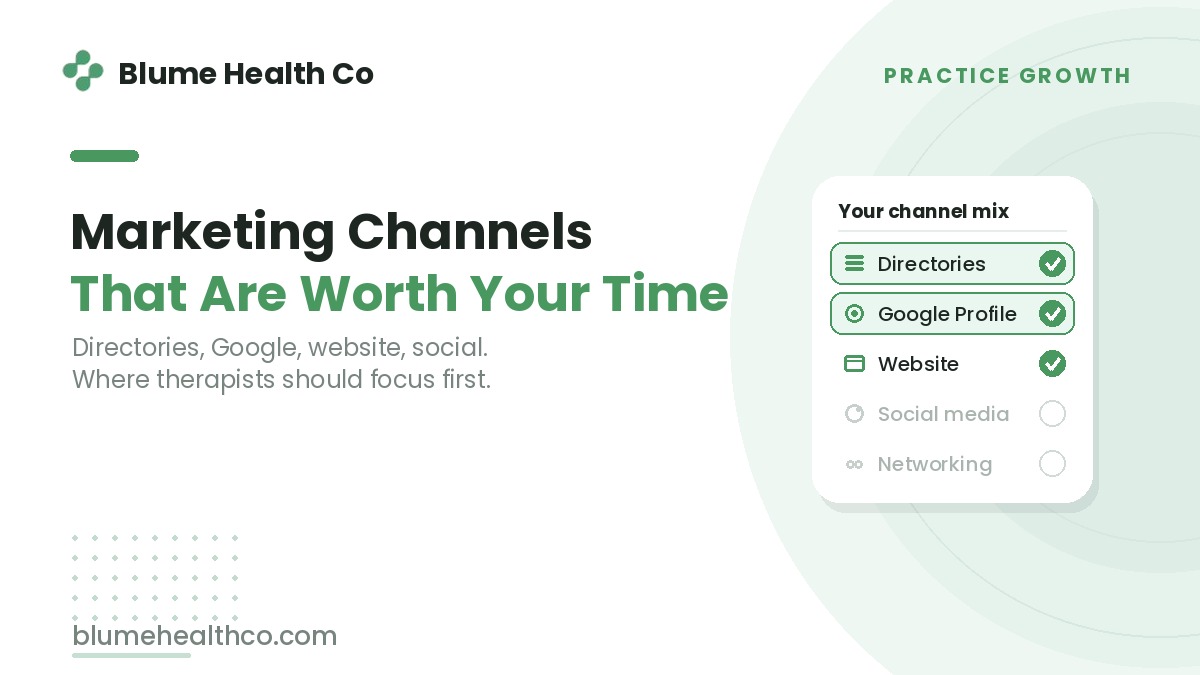
Pick a few directories and do them well rather than spreading yourself thin. If you take insurance, prioritize listings that let people filter by their plan. That single filter puts you in front of people who can afford to book you today. The one caution: your details have to match everywhere, because keeping your directory listings consistent across every platform is what search tools reward - and mismatches quietly push you down.
A listing alone is not enough. A weak profile gets skipped. Here is how to make yours work harder:
- • Write a warm, plain-language bio that names who you help and what you help with.
- • Add a clear, friendly headshot. Faces build trust faster than words.
- • List your specialties, approach, fees, and insurance so people self-qualify before they call.
- • Keep your phone number, email, and address identical everywhere.
Small edits make a real difference. If you want a step-by-step walkthrough, learn how to optimize your Psychology Today profile so it turns views into inquiries.
Show Up in Local Google Searches
When someone searches "therapist near me," Google leans on a free tool called a Google Business Profile. It is the listing that shows your practice on Google Search and Maps, with your hours, location, and reviews.
Claim yours if you have not. Then fill in every field: your practice name, category, service area, hours, phone number, and a short description. A complete profile is more likely to appear when nearby people search. For a field-by-field walkthrough, our guide to Google Business Profiles for therapists covers the setup in detail.
Add a few real photos of your office or waiting area, and choose the categories that best describe your work. These small touches help a searcher picture themselves walking in.
Consistency is the quiet part that matters most. Your practice name, address, and phone number should match exactly across your website, your directory listings, and your Google profile. When those details line up, search tools treat you as one real practice and show you more often; when they conflict, you can slip out of the results.
Build Trust With Reviews and a Clear Web Presence
Once someone finds you, they check whether they can trust you. Reviews and a clean website do that work while you sleep.
Reviews carry serious weight. 97% of consumers read online reviews for local businesses, and about half (49%) trust them as much as a personal recommendation. A therapy practice is a local business too, so the same instinct applies when someone weighs whether to call you.
Reviews come with a catch for therapists: you must protect client privacy at all times. Never confirm or reveal that a specific person is a client, including in a reply to a review. You can thank people warmly and speak in general terms without ever naming a name or a detail.
Your website should do three simple jobs. Show who you help and what you specialize in. Make your fees easy to find, and put a contact option on every page. If your site looks fine but still brings no inquiries, it is worth understanding why therapist websites never rank on Google - the fix is usually structural, not cosmetic.
Keep it uncluttered and human. A calm, honest homepage reassures a nervous first-time client far more than clever design. A short "what to expect" note and a working contact form often matter more than anything else on the page.
Be the Answer AI Tools Give
More people now ask an AI tool their first question instead of scrolling through links. To get found this way, you want to be the practice those tools point to.
That shift is already underway, as the growth in health chatbot use above shows. When someone asks one of these tools for a therapist in your area, it does not invent an answer. It pulls from clear, consistent information it finds across the web and repeats what it trusts.
You do not need to understand the technology. You need to make yourself easy to summarize:
- Write pages that answer the plain questions clients ask, like "how does therapy work" or "do you take my insurance."
- Use everyday words, not clinical jargon.
- Keep your name, location, and specialties identical everywhere online.
A short frequently-asked-questions page on your site is one of the best moves here. It answers the exact things people type, in the exact words they use. That makes it easy for a person to read and easy for an AI tool to quote.
Clear, consistent, plain-language information is what these tools point to. It is the same work that helps real people, which is why it pays off twice.
Keep Marketing HIPAA-Compliant
Everything above only helps if it protects your clients. HIPAA is the federal law that safeguards health information, and it shapes how you can market.
A few rules to keep front of mind:
- Never confirm or reveal that a specific person is a client, especially in replies to online reviews.
- Be careful with testimonials. A glowing quote can expose someone without meaning to.
- Use HIPAA-compliant tools for intake forms, messages, and any client information.
This is where a healthcare-specific approach matters. Generic marketing tools are not built for these rules, and a single careless reply can put you at risk. A partner who understands healthcare keeps your outreach safe while it grows.
Conclusion
Getting more clients is less about hustling for referrals and more about being findable, trustworthy, and clear at the moment someone decides to look for help. Claim your directory listings, complete your Google profile, gather reviews the right way, and write in plain language so both people and AI tools can point to you.
If managing all of that across platforms feels like too much on top of a full caseload, that is exactly the problem Blume Health Co was built to solve, with HIPAA-compliant marketing that keeps your practice visible so you can focus on care.
Frequently Asked Questions
Q. 1 How do therapists get more clients?
Ans. Therapists get more clients by being easy to find online at the moment someone looks for help. Claim your directory listings and Google profile, gather reviews, and write in plain language. Then give people a clear, quick way to contact you.
Q. 2 What's the fastest way to get therapy clients in private practice?
Ans. Start with directories and your free Google Business Profile, because they reach people who are ready to book now. A complete Psychology Today profile and a claimed Google listing can bring inquiries within days. Add a simple contact path and you are set.
Q. 3 Is Psychology Today worth it for therapists?
Ans. For most private-practice therapists, yes. A listing costs $29.95 per month with no contract, and it reaches people already searching for care. A strong, well-written profile is what turns those views into calls, so invest time in yours.
Q. 4 How do I get clients without paid ads?
Ans. You do not need ads to grow. Free and low-cost tools do most of the work: a complete Google Business Profile, directory listings, honest reviews, and a clear website. Consistent information across all of them keeps you showing up over time.
Q. 5 How can therapists market without breaking HIPAA?
Ans. Never confirm that a specific person is a client, including in review replies. Be cautious with testimonials, and use HIPAA-compliant tools for any client information. When in doubt, speak in general terms and keep individual details out of everything you publish.