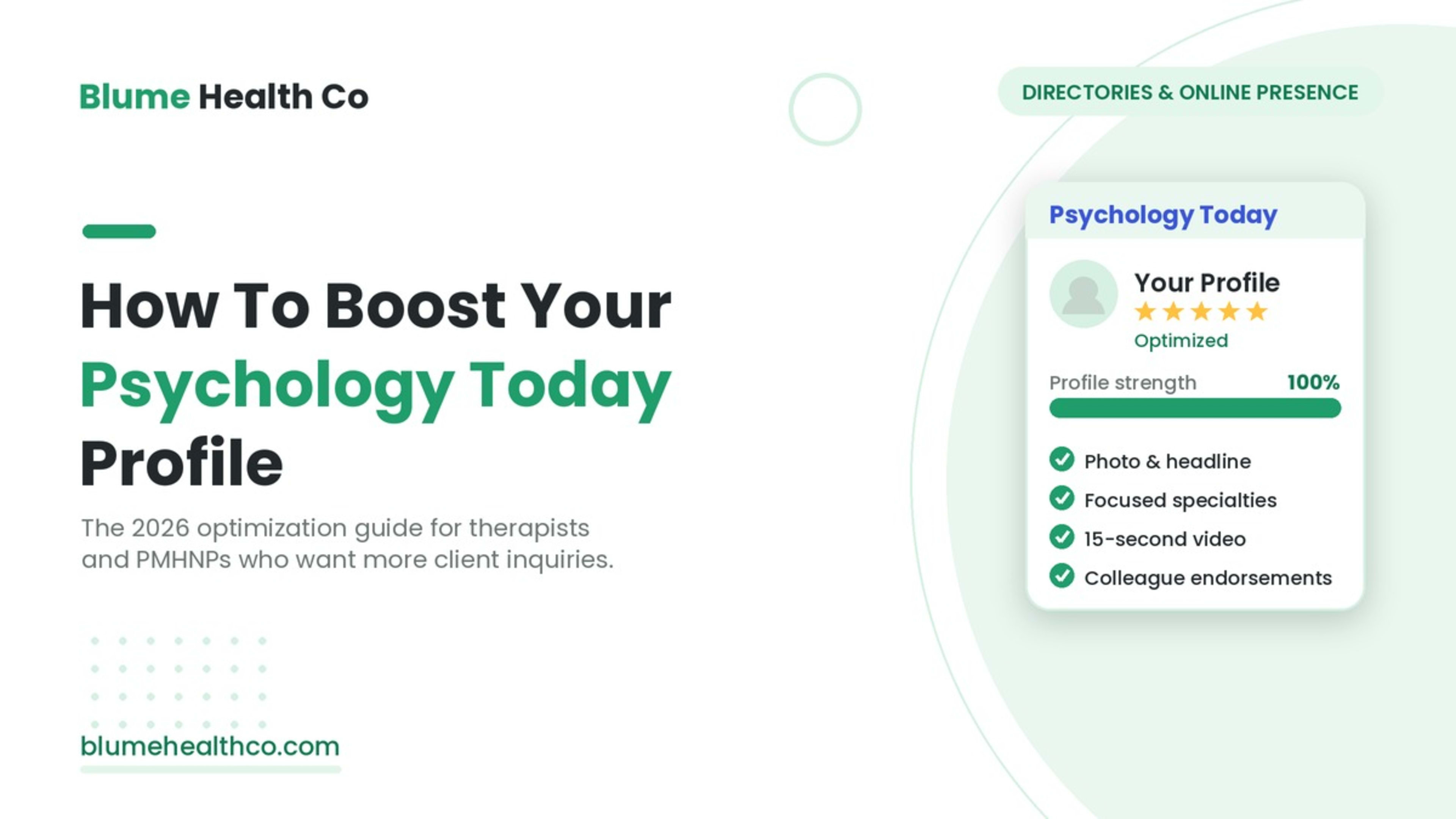
By the time a new client (or, if you're a PMHNP, a new patient) calls you, they've already investigated you. They've read your Psychology Today profile, scanned your Google reviews, checked whether your photo feels safe, and compared you against three other providers, all before you knew they existed.
Understanding this invisible evaluation is the foundation of marketing mental health services well. Here's what therapy clients and PMHNP patients actually weigh, roughly in the order they weigh it.
1. The Photo Comes First, and It Decides More Than You'd Like
It isn't fair, but it's true: the profile photo is the first filter. People are choosing someone to be vulnerable with, and they make a gut-level 'could I talk to this person?' judgment in under a second.
Warm, well-lit, recent, and genuinely you beats formal and stiff. Providers who update an old or missing photo routinely see profile contact rates jump with no other changes.
2. 'Do They Treat My Problem?': Specificity Wins
Clients don't search for 'a skilled clinician', and neither do patients. They search for their problem: postpartum anxiety, ADHD medication management, couples on the edge of divorce, trauma that won't stay in the past.
Profiles and websites that name the problem in the client's or patient's own words get chosen. Lists of twenty specialties signal none. Three named specialties, each with a sentence about how you help, signal expertise.
“Clients and patients choose the provider who names their exact problem. Specific beats impressive, every time.”
3. Reviews and Social Proof: Even for Therapy
Healthcare ethics make reviews complicated, but prospective clients and patients read them anyway, on Google, Healthgrades, WebMD, and Zocdoc. A provider with zero online footprint reads as a question mark; a few authentic reviews about responsiveness and professionalism read as reassurance.
You can ethically encourage feedback about the experience of working with your practice (scheduling, communication, environment) without ever soliciting testimonials about clinical outcomes.
4. The Practical Three: Fees, Insurance, and Availability
After the emotional checks come ruthless practical ones: Do they take my insurance or what's the fee? Are they licensed in my state? Can I actually get an appointment this month?
Hiding fees doesn't get more calls. It gets the wrong calls, or none. Providers who state fees, panels (including Headway or Alma participation), telehealth states, and realistic availability convert lookers into bookers at far higher rates.
- Session fee or fee range, and sliding-scale availability
- Insurance panels accepted, or clear cash-pay/superbill language
- States where you're licensed and whether you offer telehealth
- Current availability: accepting new clients or patients, waitlist, or full
5. Consistency Across Every Place They Find You
Here's the step most providers miss: prospective clients and patients cross-reference. They find you on Psychology Today, then Google your name, then peek at your website and your Healthgrades listing. If the phone numbers differ, the photo is ten years apart, or one profile says you're accepting new clients while another says you're not, trust quietly evaporates.
In mental health marketing, consistency is credibility. Every listing should tell the same story, with the same name, photo, contact details, and availability.
Conclusion: Win the Evaluation You Never See
You can't sit in on the midnight comparison session where a prospective client or patient chooses between you and two other providers. But you can make sure everything they find (photo, specifics, reviews, fees, and a consistent footprint) answers their real question: 'Will this person get me, and can I trust them?'
Blume Health Co manages that entire footprint for therapists, counselors, and PMHNPs: 30+ directory listings, Psychology Today profile optimization, reviews, and websites. No long-term contracts. Book a free demo to see your current online presence the way clients and patients see it.