Headway, Alma, and Grow Therapy have changed how thousands of therapists and PMHNPs run their practices. Credentialing in weeks instead of months, billing handled, insurance panels unlocked, it's a genuinely useful deal.
But every platform deal has fine print. Before you build your entire practice on someone else's infrastructure, here's the honest picture providers rarely hear, including what these platforms quietly leave on your plate.
1. What These Platforms Actually Do (and Don't Do)
All three solve the same core problem: getting paneled with insurance and getting paid without hiring a biller. Headway and Alma credential you with major payers and handle claims; Grow Therapy adds heavier client-matching and an EHR layer.
What none of them are is a marketing engine for your practice. They are billing and credentialing infrastructure. Marketing a mental health practice, being found by the right patients, in the right state, for the right specialty, remains entirely your job.
2. The Real Pros: Speed, Panels, and Predictable Payment
Credit where due. For a new psych NP private practice, these platforms remove the two scariest barriers: insurance credentialing (often 90-150 days solo) and claim denials. Many providers see their first paneled patient within 30-45 days of signing up.
Guaranteed payment timelines are real, too. Headway and Alma both pay on session completion regardless of when the insurer settles, meaningful cash-flow protection for a solo provider.
- Fast credentialing with major commercial payers
- No billing staff, no claim chasing, predictable payouts
- A baseline referral stream from the platform's own directory
- Low or no upfront cost to join
3. The Hidden Cons: Margin, Dependence, and a Caseload You Don't Control
The platform takes its cut through negotiated rates. You typically earn less per session than direct-paneled providers. More important: the referral stream is not yours. Platform-sourced patients belong to the platform's ecosystem, ranked by an algorithm you can't see or influence.
When the algorithm shifts, your caseload shifts with it. Providers tell us the same story constantly: 'Referrals were great for six months, then they dried up and I had no plan B.'
“A platform caseload is a rented caseload. If you didn't build the referral channel, you don't control it.”
4. The Visibility Gap Nobody Mentions
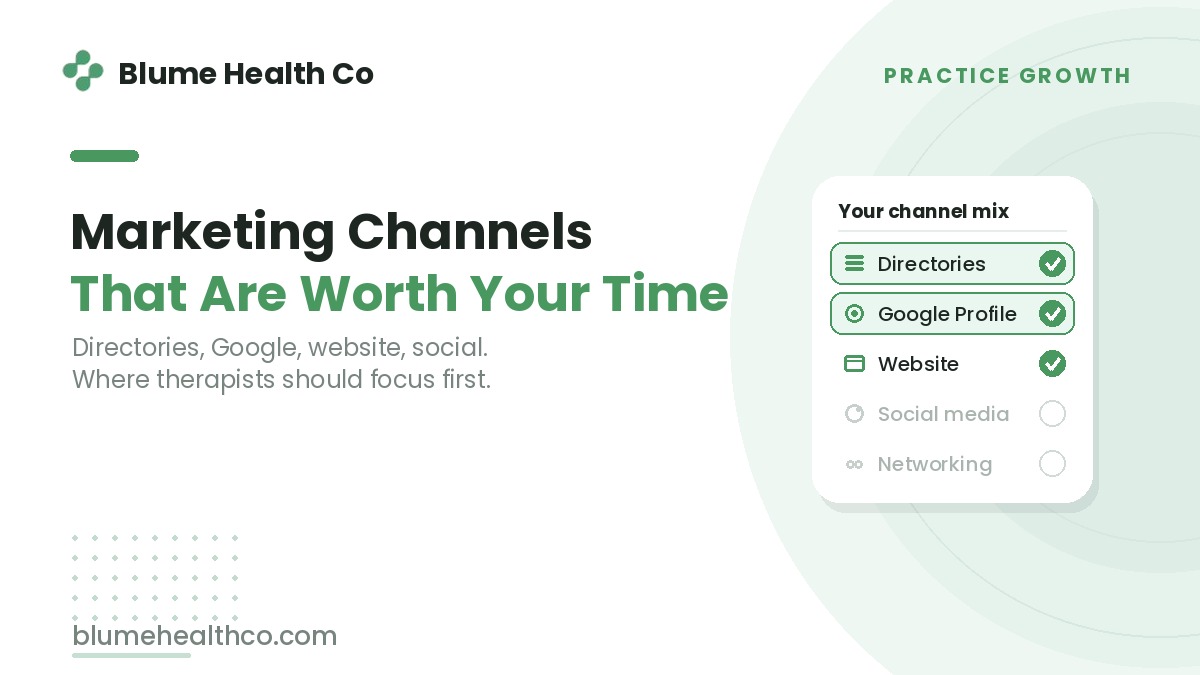
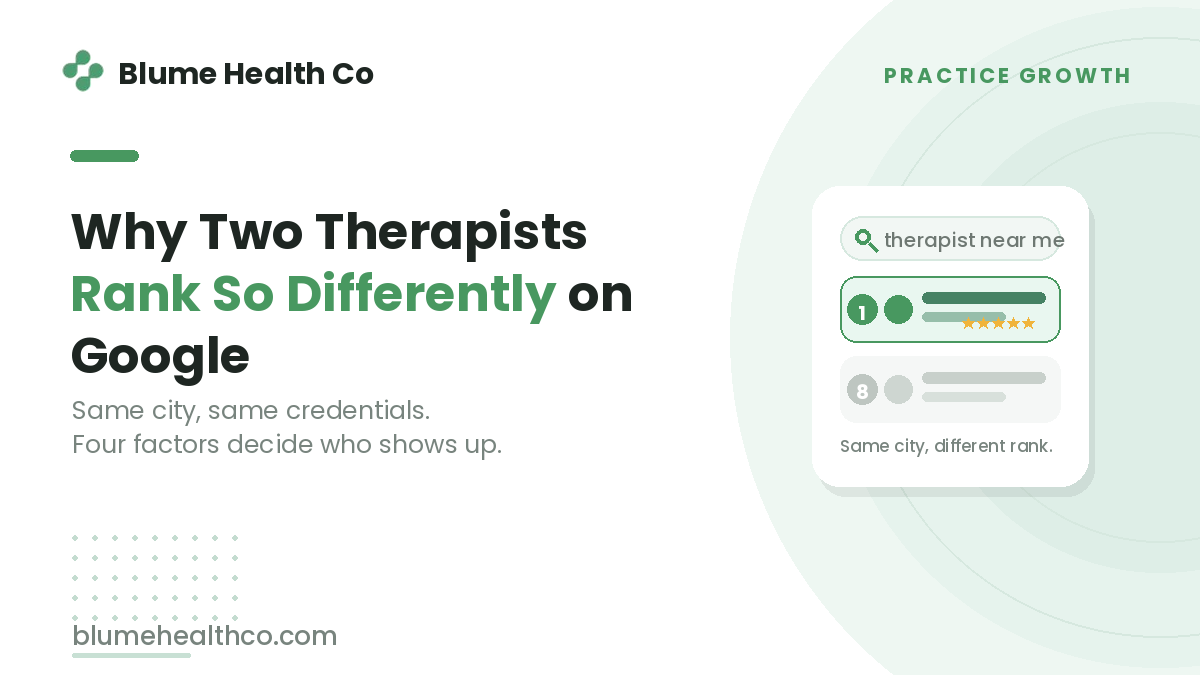
Being on Headway or Alma does not put you on page one of Google. It doesn't claim your Google Business Profile, optimize your Psychology Today profile, build your website, or manage your reviews on Healthgrades and WebMD.
That's the gap where independent mental health marketing lives, and it's exactly why the most resilient providers run both: platforms for billing rails, plus their own visibility engine that no algorithm can switch off.
5. The Smart Play: Use the Platform, Own the Patient Pipeline
This isn't an either/or decision. The strongest setup we see among thriving providers is a hybrid:
- Keep Headway, Alma, or Grow Therapy for credentialing and billing
- Build your own website and Google Business Profile so patients can find you directly
- Maintain optimized profiles on Psychology Today and the major health directories
- Collect reviews under your own name, not just the platform's
- Track where every new patient comes from so you know your real dependence level
Conclusion: Platforms Are a Tool, Not a Strategy
Headway, Alma, and Grow Therapy earn their place in a modern practice, as infrastructure. Just don't confuse infrastructure with growth. Your name, your visibility, and your patient pipeline should belong to you.
Blume Health Co is the marketing layer that works alongside whichever platform you use. We're built exclusively for PMHNPs, therapists, and counselors, directory listings, websites, SEO, and reviews, with no long-term contracts. See our PMHNP marketing services or book a free demo.